


Scroll through a few tractor listings, and you may well hit a wall of letters that don’t spell anything: PTO, HST, ROPS, 4WD, FEL. If you’ve never sat in a cab before, it can feel like everyone else has a manual you never received. We’re here to put an end to that.
Here at AgKing, we talk through tractor terms with new buyers most days at our Wangara yard, and it’s rarely the machine itself that trips people up. It’s the language it’s sold in. This guide runs through the tractor terminology you’ll actually meet on AgKing tractors, tractor implements and parts. We spell things out in plain Australian, so you can shop with confidence rather than nodding along.
Looking to Buy Your First Tractor?
Pull up here and chat to the team at AgKing. We’ll give you straight-talking advice and all the solid info you genuinely need.
Where Tractor Language Actually Comes From
The word “tractor” is older than most people guess, and it wasn’t invented for farming at all. It was first recorded in its farm-machinery sense in the 1800s, shortened from “traction engine” – the name for the steam-powered rigs that dragged ploughs and heavy loads before petrol engines took over.
Plenty of the jargon on a modern spec sheet has a similarly practical backstory. The three-point linkage that most implements bolt onto was patented by Irish engineer Harry Ferguson in 1926, after years of trying to stop early tractors tipping backwards when a plough bit into hard ground. It reached the mass market in 1939 through the Ford-Ferguson 9N, and it’s still the industry standard a century later.
None of this changes how you’d actually use a tractor. But it explains why so much of the terminology sounds oddly specific: most of it was invented to solve one real problem at a time, not dreamed up by a marketing team.
What Are the Main Parts of a Tractor?
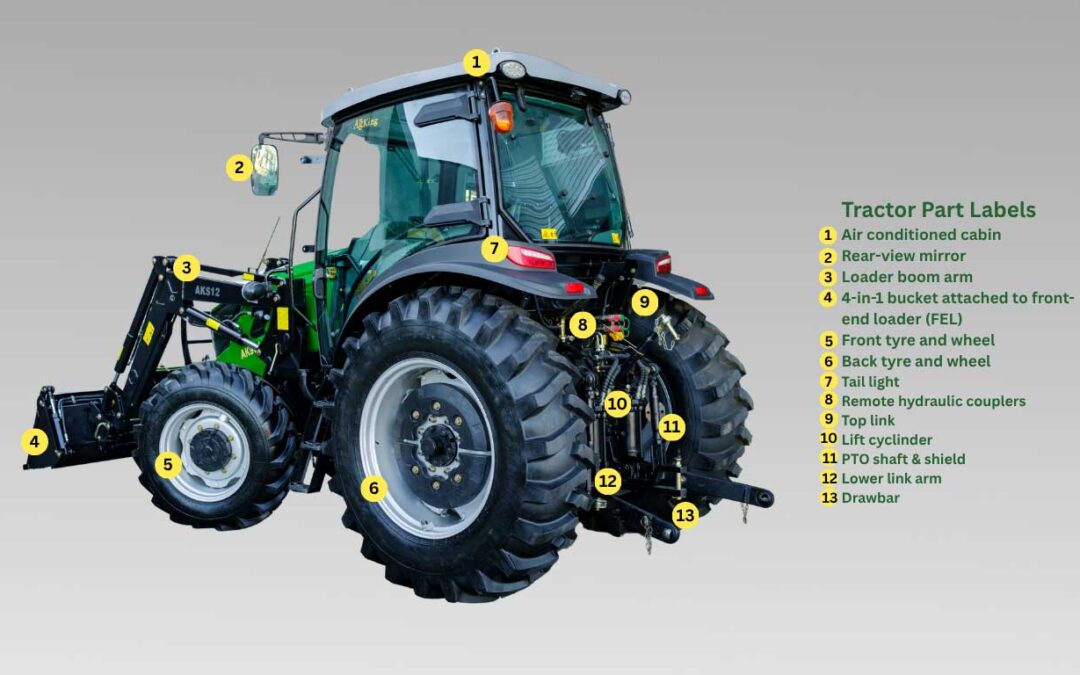
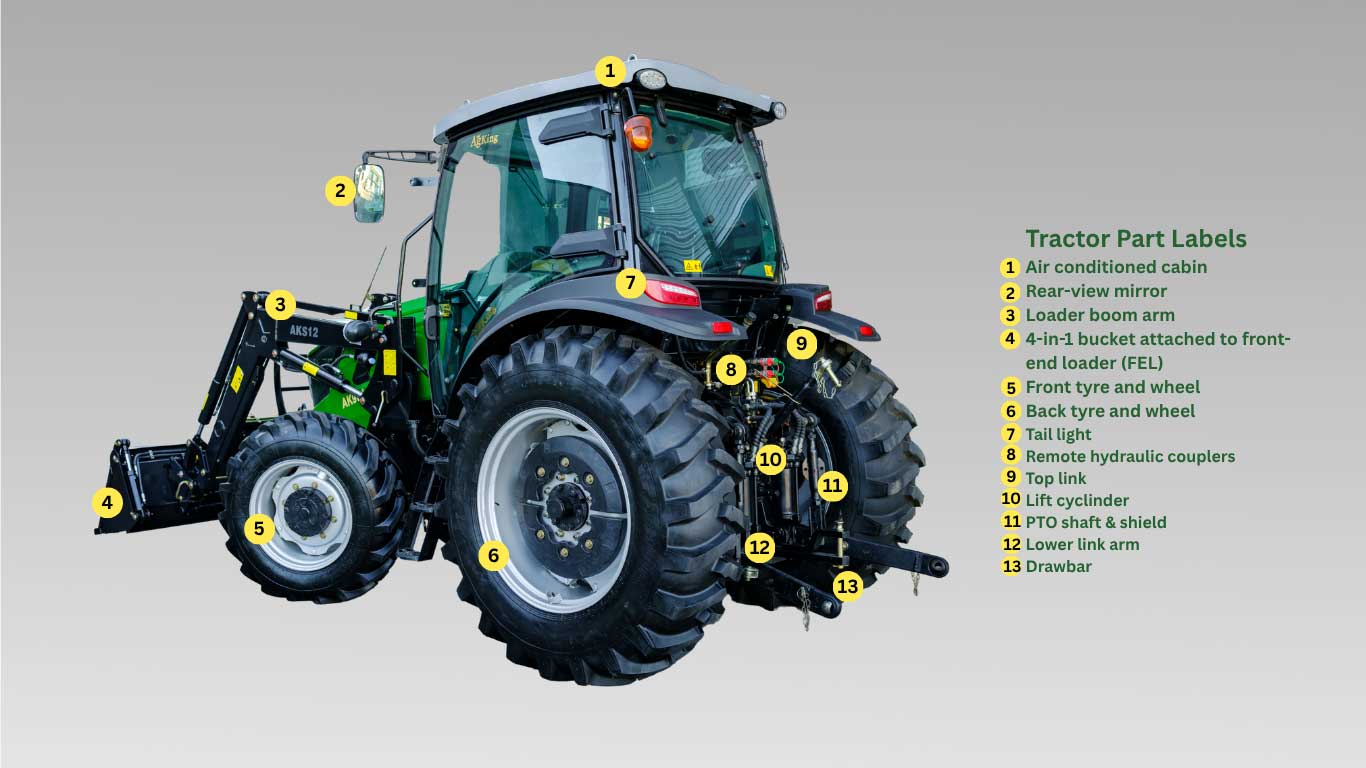
Every tractor, from a 24HP compact to a 90HP workhorse, shares the same handful of major parts: an engine and transmission, a PTO shaft at the rear, a three-point linkage for attaching implements, a drawbar, and either an open ROPS frame or an enclosed cabin over the operator’s seat. Implements such as slashers, harrows and loaders connect at these same points, whatever brand you’re looking at.
Our image at the top of the page maps these out, so you can see exactly where each part sits and what it’s called when you spot it on a real machine.
So, now let’s get deep into tractor glossary terms!
Engine, Transmission and Power: HP, PTO, HST and 4WD
HP (Horsepower)
Tells you how much work the engine can do. The unit has an odd history: Scottish engineer James Watt coined it in the 1780s as a way to compare his steam engines against the horses they were replacing at the time, and the figure stuck. AgKing, Enfly and TYM tractors on our floor range from 24HP compacts up to 90HP workhorses, so the right HP comes down to your acreage and workload, not the biggest number on the sheet.
PTO (Power Take-off)
Is the rotating shaft at the back of the tractor that drives an implement directly off the engine, rather than the implement needing its own motor. International Harvester fitted the first production PTO in 1918, and other makers followed through the 1920s until it became the standard way to run a slasher, a wood chipper, a PTO cement mixer or a fertiliser spreader.
HST (Hydrostatic Transmission)
Uses hydraulic fluid rather than a manual clutch and gearbox to change speed and direction. It behaves a little like an automatic car: ease off one pedal, and the tractor slows or reverses without you touching a gear stick. TYM’s HST models are a good example of this if you’d rather not be clutching in and out all day on loader work.
4WD (Four-wheel Drive)
Simply means power reaches all four wheels instead of two. It’s worth having on Western Australia’s sandier or clay-heavy blocks, where a two-wheel-drive tractor can lose traction faster than you’d expect.
Cabin, ROPS and the Safety Terms Worth Knowing
ROPS (Roll-over Protective Structure)
Is the reinforced frame fitted over and around the operator’s seat, designed to stop the tractor crushing the driver if it rolls. It’s been standard safety practice on Australian farms for decades, and WorkSafe authorities in most states still publish specific guidance on inspecting and maintaining them.
A Cabin Tractor
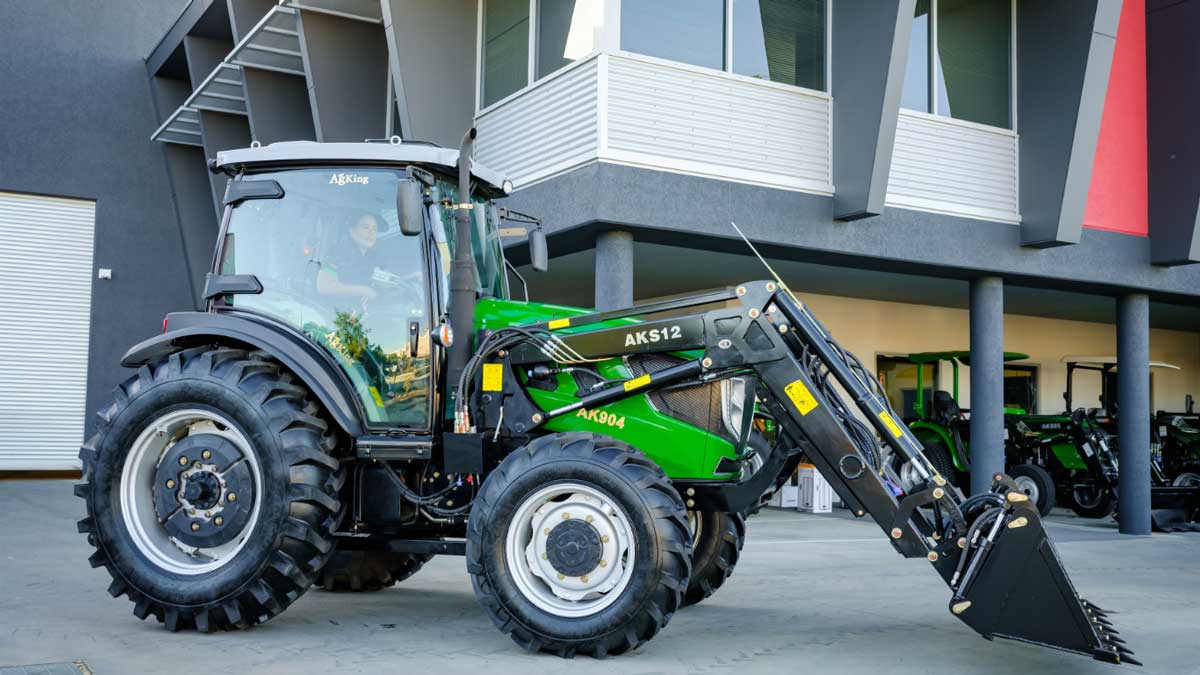
Takes that ROPS protection and encloses it, adding weatherproofing and, on our air-conditioned cabin tractors, a genuinely comfortable place to spend a long day. Whether you go ROPS or cabin usually comes down to budget and how many hours you’re planning to spend in the seat through a WA summer.
Loaders, Hitches and Attachments: FEL, 3-Point Linkage and Quick Hitch
FEL (Front-end Loader)
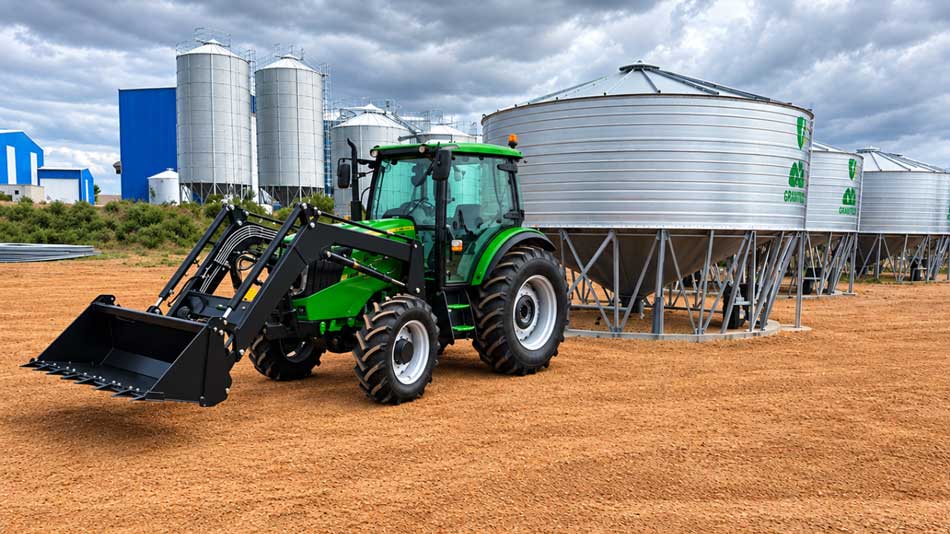
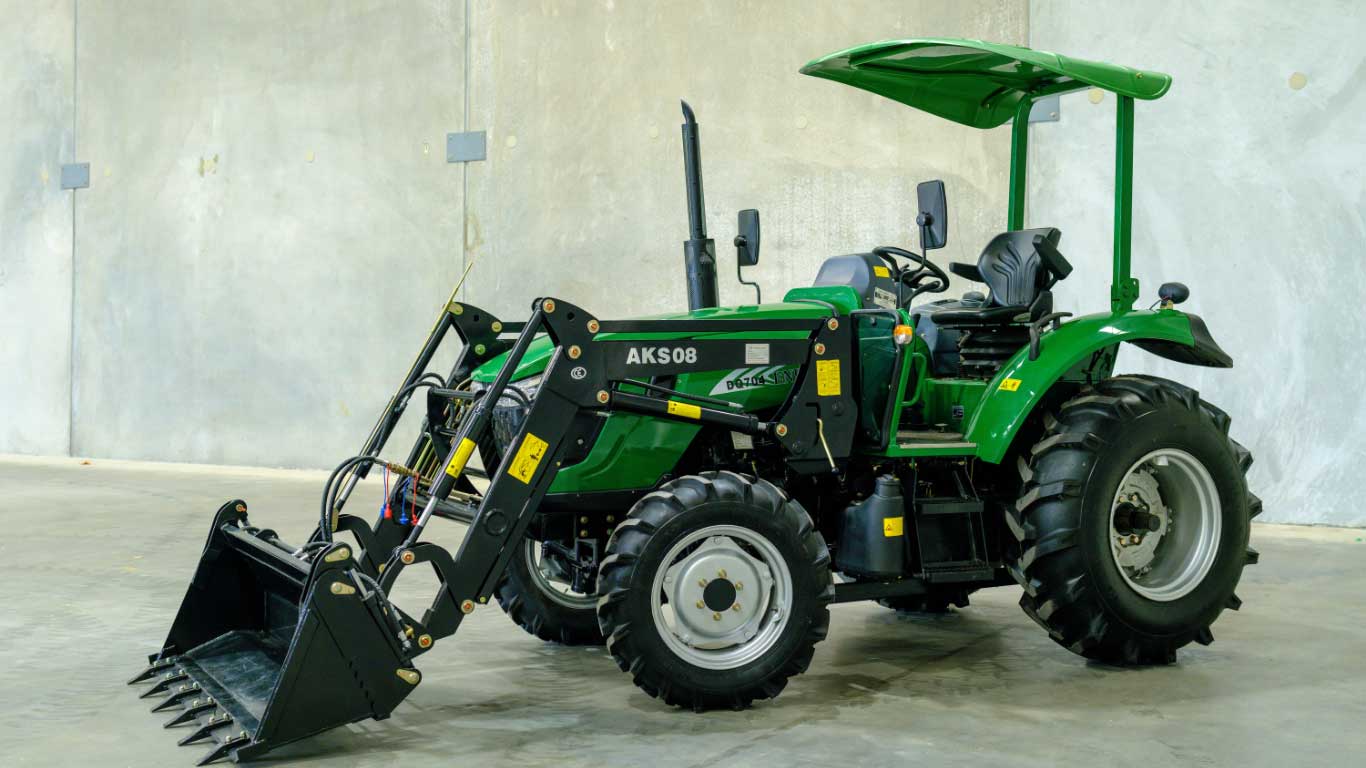
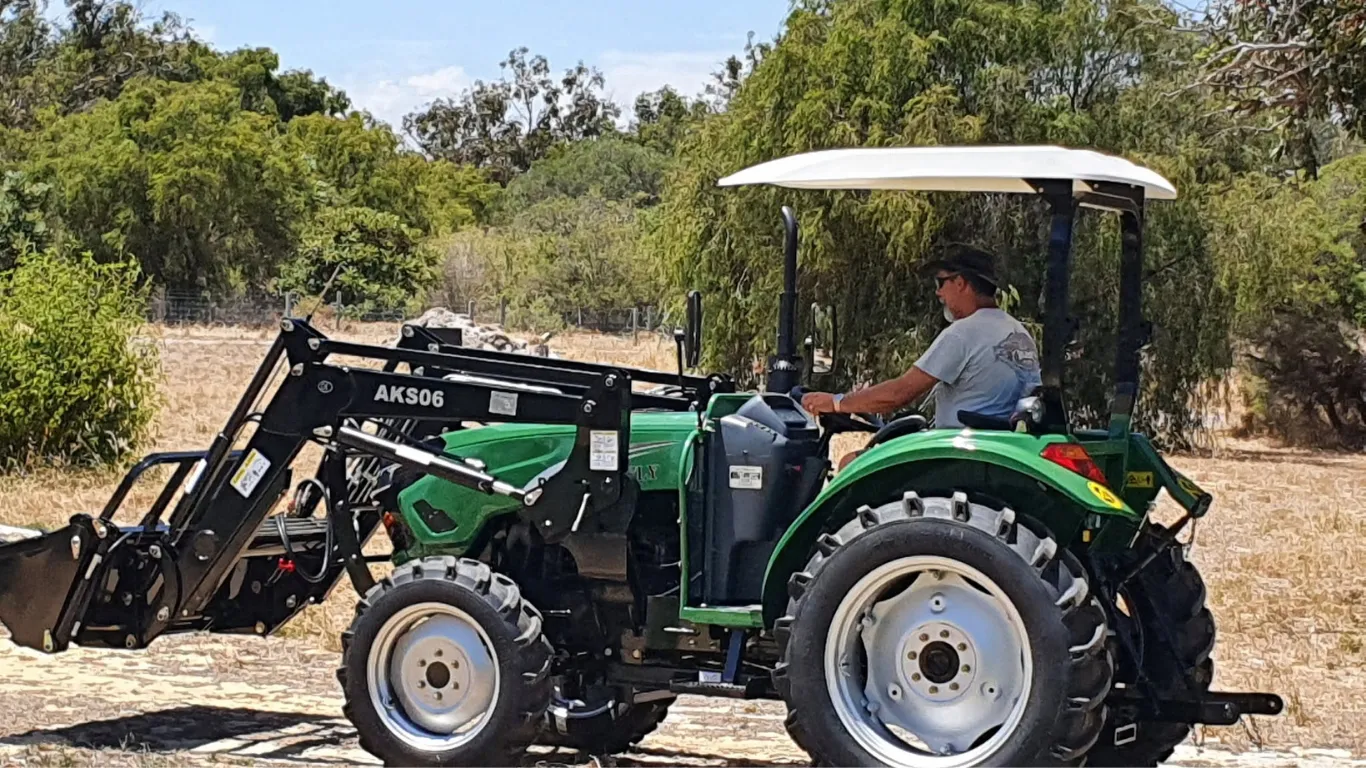
Is the bucket-and-arm attachment on the front of the tractor, used for moving soil, mulch, feed or just about anything else you can scoop. Our heavy-duty FEL tractors are built with this in mind rather than having a loader bolted on as an afterthought.
3PL (Three-point Linkage)
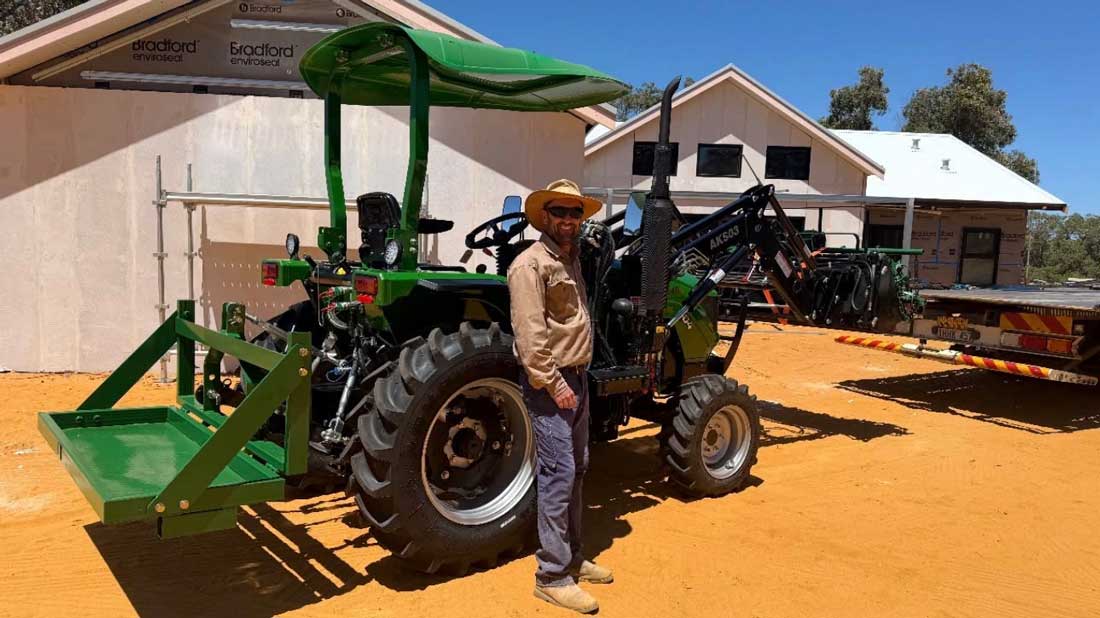
Most rear-mounted implements, including our 3-point linkage boom sprayer, attach to the three-point linkage (3PL) – the three arms at the rear that Ferguson’s design made the industry standard.
Quick Hitch
Lets you swap implements on and off that linkage without climbing down to pin each one by hand, while the drawbar is the fixed towing point lower down, used for trailers and anything you’re pulling rather than lifting.
Common Implement Names You’ll See on AgKing’s Site
Once you know the engine and hitch terms, most implement names are refreshingly literal. Here’s a quick reference to the ones we’re asked about most:
- Slasher – A rotary mower for tall grass, pasture and firebreaks
- Disc harrows – Angled discs that break up and level worked soil
- Drag harrows – A chain-mesh implement that smooths and spreads after cultivation
- Rotary hoe – Powered tines that dig and mix soil in one pass, useful before seeding
- Post hole digger – An auger for boring fence and strainer post holes
- Backhoe – A rear-mounted digging arm and bucket for trenching
- Pallet forks – Front-mounted tines for lifting pallets, hay bales or feed
- Carry-all – A flat rear tray for hauling tools, feed or fencing gear
- PTO cement mixer – A mixer drum driven off the tractor’s PTO, handy for post and slab jobs
New to Tractors and Ready to Buy? Here’s Why WA Farmers Talk to AgKing First
If you’ve read this far into tractor terms because you’re actually looking at a first tractor, that’s exactly who this guide was written for. Nobody expects you to already speak the language, and our team at Wangara would rather talk you through it than watch you guess.
We’re Australian-owned and run, and we’ve built our range around what small to medium WA farms and hobby blocks genuinely need: straightforward AgKing, Enfly and TYM tractors, matched implements, and parts and servicing you’re not stuck waiting weeks for. If a term in a listing doesn’t make sense, or you’re not sure whether you need ROPS or cabin, HST or gear drive, 40HP or 70HP, that’s exactly the conversation we have every day.
Give our Wangara team a call and talk through your block, your budget and the jobs you need done. We’ll point you to the tractor and implements that actually suit your farm.
Tractor Terms Explained: A Plain-English Guide for First-Time WA Buyers
Scroll through a few tractor listings, and you may well hit a wall of letters that don't spell...
Tractor Safety Tips for WA Farmers
Farm tractor safety comes down to a few consistent habits: check your machine, wear your seatbelt,...
TYM vs Enfly Tractor: Which Is Right for Your WA Farm?
Two AgKing customers can walk in chasing the exact same job and drive away in two completely...

10 Hobby Farm Tractor Implements That Earn Their Keep in WA
Slashers, post hole diggers, carry-alls, pallet forks - on a WA small acreage, the right hobby...